
Description
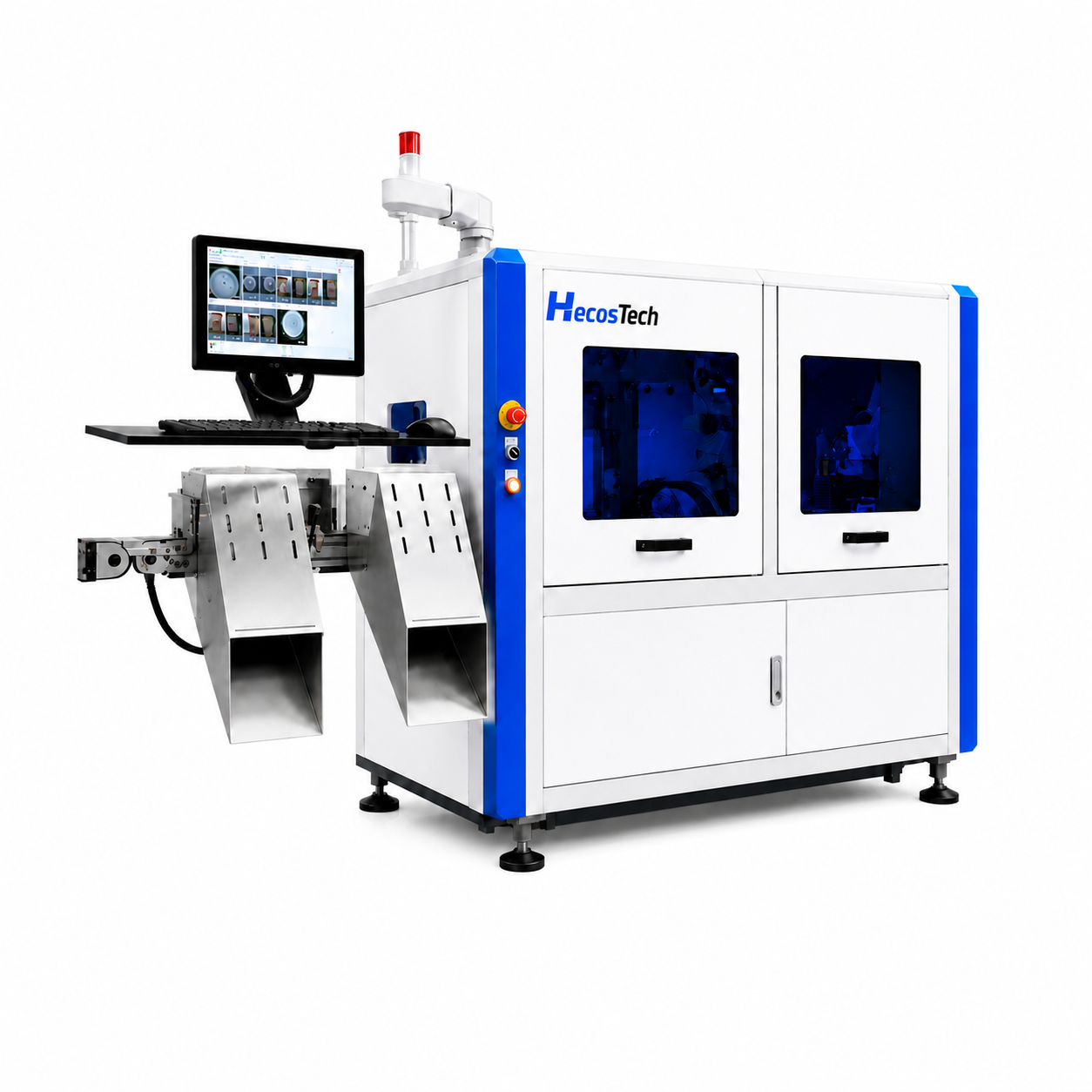
HS-10C Visual Inspection Machine Overview
The HS-10C Series is HecosTech’s visual inspection machine for automated quality control of plastic containers and packaging products. The inspection setup is configured around the actual product, inspection requirements, handling process and production-line arrangement.
Vision-based inspection can support consistent product checking as part of an automated production process and reduce dependence on manual inspection for repetitive quality control tasks.
Plastic Container Visual Inspection Applications
The HS-10C can be configured for visual inspection of plastic containers including bottles, cups, tubs, lids and buckets within the applicable product range. Product shape, dimensions, surface characteristics, inspection position, handling method and inspection criteria should be evaluated when defining the inspection setup.
Different products may require different positioning, imaging, and handling arrangements according to their structure and production process.
Automatic Visual Inspection for Plastic Container Quality Control
For container appearance inspection, provide product samples and examples of acceptable and unacceptable conditions. This helps define the inspection area, product orientation, handling method, and reject criteria before quotation.
A visual inspection machine should be configured according to the actual quality control requirements rather than selected by machine type alone. Important factors include the product, inspection area, defect criteria, product orientation, production process, handling conditions, and required production flow.
Providing product samples, drawings, inspection requirements, and examples of acceptable and unacceptable products helps define a more suitable inspection solution.
For additional technical information about machine vision and industrial inspection, see the Association for Advancing Automation (A3) Vision & Imaging resources.
Production Line and Automation Integration
Visual inspection equipment can operate as an individual inspection station or be integrated into an automated production line. Integration requirements depend on product feeding, positioning, inspection, sorting or downstream handling, upstream and downstream equipment, and available factory layout.
The inspection process can also be coordinated with conveyor systems and other automation equipment to support continuous product handling between production stages.
HecosTech Custom Visual Inspection Solutions
HecosTech provides visual inspection machine solutions according to the product and quality control requirements. Inspection configuration can be discussed based on product dimensions, inspection criteria, production process, handling method, factory layout, and automation requirements.
For projects requiring additional production equipment, HecosTech can also support production planning with conveyor systems, heat transfer machines, blow molding machines, and other automation products.
Contact HecosTech with your product samples, inspection requirements, and production information to discuss a suitable visual inspection solution.
Frequently Asked Questions About Visual Inspection Machines
1. What is a visual inspection machine used for?
A visual inspection machine is used for automated quality control by checking products according to defined inspection requirements. In plastic packaging production, it can be integrated into the production process for continuous product inspection.
2. What plastic products can be inspected?
Applications can include plastic containers, bottles, cups, tubs, lids, buckets, and other packaging products. The inspection configuration depends on product shape, dimensions, inspection area, and quality control requirements.
3. Can inspection requirements be customized for different products?
Yes. Inspection configuration can be adapted according to the product, inspection area, defect criteria, positioning requirements, handling method, and production process.
4. What information is needed for a visual inspection project?
Useful information includes product drawings or samples, dimensions, inspection areas, quality criteria, examples of acceptable and defective products, production process, handling requirements, and production line layout.
5. Can a visual inspection machine be integrated with a conveyor system?
Yes. Depending on the production process, visual inspection equipment can be integrated with conveyor systems for product feeding, positioning, inspection, and downstream handling.
6. How do I choose the right visual inspection machine?
The equipment should be selected according to the product, inspection requirements, defect criteria, production process, product handling method, existing equipment, and required line integration rather than by machine size alone.


Reviews
There are no reviews yet.