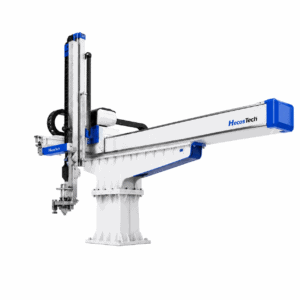
Moving from 3D-printed prototypes to molded drone plastic parts? HecosTech supports custom injection molds, molded parts and automated takeout for production projects.
Choosing between 3D printing vs injection molding for drone parts depends mainly on the development stage, part design, material requirements and expected production volume.
3D printing is useful for rapid prototypes, design changes and low-volume components because it does not require conventional injection tooling. UAV manufacturers can test fit, geometry and design iterations before committing to a production mold. Protolabs and Formlabs both identify additive manufacturing as an important UAV prototyping and production option.
Injection molding becomes more relevant when a drone plastic part reaches a stable design and requires repeatable batch or mass production. The process requires tooling investment, but it can provide consistent molded parts and lower unit costs as suitable production quantities increase.
After comparing 3D printing vs injection molding for drone parts, HecosTech supports the injection molding production stage with custom molds, molded UAV plastic parts and HT3/HT4/HT5 T-series automatic takeout solutions.
3D Printing vs Injection Molding for Drone Parts: When to Use Each?
For early UAV development, 3D printing offers flexibility. Engineers can change a CAD model and produce a new prototype without modifying a production mold. This is especially useful while dimensions, mounting positions or the external shape are still changing.
Injection molding is better suited when the component design has been validated and production requires consistent dimensions, surface quality and repeated output.
A practical manufacturing path can therefore be:
3D prototype → design validation → final part design → injection mold → molded production
This does not mean every 3D-printed drone component should eventually be injection molded. Complex low-volume components or parts designed specifically for additive manufacturing may remain better suited to 3D printing. Formlabs, for example, documents UAV projects where SLS parts remain the final production solution at quantities of several hundred pieces.
When Should Drone Parts Move to Injection Molding?
The decision should not be based on one universal production quantity. Part size, material, mold complexity and 3D-printing process all affect the break-even point.
A move toward injection molding becomes more reasonable when:
The UAV part design is stable
Production quantity is increasing
Repeatable dimensions are important
The same component will be produced continuously
Unit production cost becomes increasingly important
Xometry’s comparison using a specific drone-leg geometry shows how injection molding can become significantly more economical at higher quantities, but that example should not be treated as a universal threshold for every drone component.
This is why 3D printing vs injection molding for drone parts should be evaluated according to the actual component and expected production volume.
From Drone Prototype to Injection Mold and Automation
Once 3D printing vs injection molding for drone parts has been evaluated and injection molding is selected, the final production part should be reviewed for moldability.
Wall thickness, ribs, bosses, mounting features, draft and material can affect both the molded part and mold design.
HecosTech can support the next production stages:
Final UAV part → custom injection mold → molded plastic parts → HT3/HT4/HT5 automatic takeout
Robot takeout can be considered during mold development so that part ejection, gripping position and robot access match the future production process.
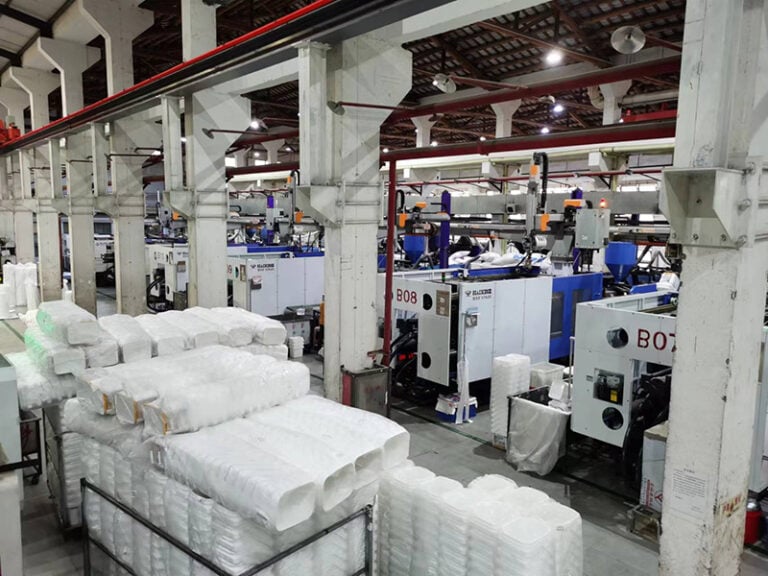
Ready to Move Your Drone Part From Prototype to Production?
HecosTech can evaluate your final UAV plastic part for injection molding, custom tooling and automated takeout.
Why Work With HecosTech After the Prototype Stage?
HecosTech is a China manufacturer supporting UAV projects after the design moves toward injection-molded production.
Our support can include:
Injection-moldability evaluation
Custom injection mold development
Mold trial and sample evaluation
HT3, HT4 and HT5 T-series takeout robots
Insert molding automation for suitable components
For customers comparing 3D printing vs injection molding for drone parts, HecosTech mainly supports the transition into tooling, molded production and automation.
3D Printing vs Injection Molding for Drone Parts FAQs
Is injection molding always cheaper than 3D printing?
No. For prototypes and low quantities, 3D printing may avoid tooling costs and offer greater flexibility.
Injection molding becomes more attractive when the design is stable and repeatable production volume justifies the mold investment.
Can a 3D-printed drone part be directly converted to injection molding?
Not always. A part designed for additive manufacturing may need changes to wall thickness, draft, ribs, undercuts or other features before injection molding.
Can HecosTech provide the mold, plastic parts and robot automation?
Yes. HecosTech can support the custom mold, injection-molded UAV plastic parts and HT3/HT4/HT5 T-series automatic takeout according to the actual production project.
Send HecosTech your final part drawing, prototype or production requirements. We can evaluate the custom mold, molded part and automation solution.