
A cold runner solidifies with the molded part and must be removed from the mold. A hot runner keeps material molten in its heated flow passages. Choosing between them means comparing the complete tooling and production arrangement, including material, gate requirements, maintenance and part handling.
For an injection molding project, the runner is the delivery path rather than the finished product. A useful comparison starts with the part drawing and production requirement, then asks what each proposed arrangement changes. Neither a lower tooling quotation nor the label ‘runnerless’ is enough to establish the best project choice.
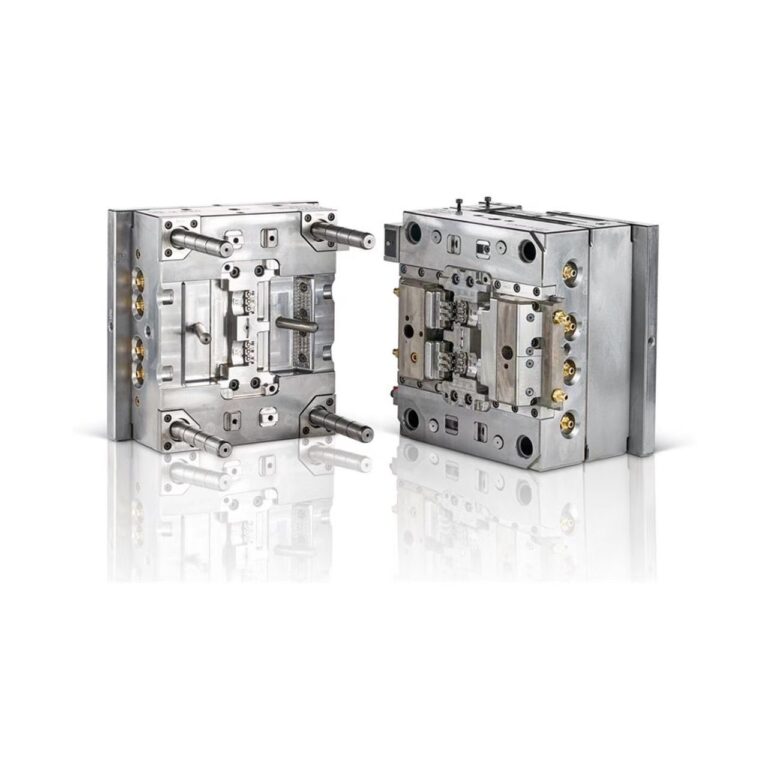
Keep Runner Selection Within the Mold Project
HecosTech’s custom injection mold scope includes hot runner and cold runner configurations, evaluated with the part geometry, material and intended machine. The runner decision belongs with the gate layout, cavity arrangement, cooling and ejection review.
Start with the same part revision and material requirement when requesting alternatives. Identify the production site and the equipment already available there. If a quotation assumes additional control or handling equipment, ask for it to be identified so that the two proposals cover a comparable production task.
Understand What Leaves the Mold Each Cycle
A cold runner supplies melt through channels that cool and solidify during molding. A hot runner uses heated passages and nozzles to keep that delivery material molten during normal production. Husky’s hot runner fundamentals describes this difference and the role of the heated manifold and temperature control.
Ask what leaves the proposed mold: individual parts, parts still attached to a runner, or separate parts and runners. Request that this be shown in the mold layout and handling sequence. The answer is more useful for planning takeout than a general statement that a tool is automatic.
Runner type and cavity count are different decisions. A proposal should identify both, together with the gate arrangement. Avoid treating a hot runner quotation as evidence of a particular cavity count, machine size or production rate.
Review the Gate Against Part Function and Appearance
The gate is where material enters the part cavity. Its location and the mark left after molding matter wherever a part must fit, seal, stack or present a visible surface. Mark these areas on the drawing and ask the designer to explain the proposed gate location before approving the tooling concept.
Hot runner does not identify one gating method. Thermal tip gates and mechanically operated valve gates have different arrangements. Mold-Masters’ gating-style explanation discusses gate marks and material-dependent selection. A proposed gate should be assessed against the actual resin and surface requirement, not described as universally suitable.
For a plastic bucket mold, provide the lid-fit, handle and stacking requirements with the bucket drawing. Ask where a gate mark is acceptable and which areas need functional review. A gate arrangement used on another bucket is a reference, not approval for a new design.
Include Material and Color Changes in the Brief
Give the exact resin grade and any proposed colorant or filler, rather than only a broad material name. Ask the resin and runner suppliers to confirm the proposed combination. Do not apply another project’s temperature settings, material substitution or regrind allowance to a new product without the responsible technical team’s review.
List the planned colors and how often production changes between them. DME’s color-change discussion identifies residual color as an issue when changing material color in runner systems. For quotation comparison, ask how changeover, cleaning and restart acceptance are accounted for; do not assume either arrangement changes color without time or material loss.
If reuse of cold-runner material is proposed, record the actual acceptance conditions for that reuse. Keep any material-recovery assumption separate from the cost of grinding, sorting and handling. An unconfirmed reuse plan should not be counted as an established saving in the project comparison.
Compare the Quotation and Ongoing Work
Cold runner tooling may have a lower initial cost, while a hot runner adds heated components, control equipment and maintenance requirements. Mold-Masters’ comparison also identifies runner removal and secondary handling as relevant operating work. These are categories to compare, not a promised saving for a HecosTech project.
Request a clear inclusion list for the mold, controller where required, connections, initial spare parts, trial scope and handling equipment. Ask which items the production site must supply. Record how component identification, maintenance documentation and access for service will be handled, without assuming that every quotation includes the same support package.
Compare costs over the same expected production period using stated assumptions for demand, material use, acceptable parts, operating time and maintenance. Test the comparison against a lower-demand scenario as well. There is no universal payback quantity or fixed price: HecosTech quotations depend on the confirmed project scope.
Plan Runner Removal and Finished-Part Takeout Together
Where a solid runner is present, confirm how it is separated and where it goes after removal. Depending on the proposed tooling, that may involve a separate handling step. The injection molding robot system review should distinguish runner handling from pickup and placement of the finished parts.
Removing a cold runner from the process does not remove the need to handle the product. Parts may still need controlled placement, orientation, stacking, inspection or transfer. Ask for the receiving position and downstream sequence to be defined for either mold proposal, using the same finished-product requirement.
Agree what evidence will demonstrate the proposed sequence during the project review. Include the condition of the part at handoff and any separation step before the next operation. A mold quotation should not be treated as proof that an existing robot or receiving station can complete that sequence without evaluation.
Hot Runner and Cold Runner Selection Questions
Does a Hot Runner Mean Zero Material Waste?
No. Eliminating the solid runner from a particular layout is not a complete material-loss calculation. Ask how startup, color changes, purging and rejected parts are included in the estimate. Compare usable output and actual material accounting rather than applying a zero-waste assumption to the whole production line.
Can the Runner Type Be Changed After the Mold Is Built?
A change requires an engineering review of the existing mold, gate positions, available space, thermal layout, machine interfaces and proposed controls. Do not assume that a conversion is a simple component replacement. Supply the original mold documentation and the reason for the change before relying on a retrofit in the production plan.
Discuss the Runner Arrangement for Your Mold
Send the part drawing, resin grade, color-change requirements, production plan and machine information. HecosTech can review the custom mold project requirements and discuss the tooling and handling scope. Use email or WhatsApp to request a project-specific quotation.