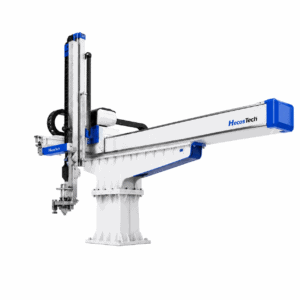
An IML robot for bucket production must match the container, mold, label, injection molding machine, target cycle time, and finished-product handling process. HecosTech configures IML automation for paint buckets, food pails, chemical containers, lubricant buckets, and other rigid plastic packaging.
An IML robot for bucket production automatically picks a pre-printed label, places it inside the open mold, and removes the finished bucket after injection molding. For medium and large containers, stable production depends on more than robot speed. Bucket dimensions and weight, label coverage, mold structure, demolding conditions, machine specifications, and downstream handling must be evaluated together.
The configuration of a 20L bucket IML robot should not be selected by container capacity alone. A 20L round paint bucket and a 20L square chemical pail can require different end-of-arm tooling, label magazines, robot motion paths, takeout methods, and cycle timing.
What Makes an IML Robot for Bucket Production Different?
Buckets and pails are generally deeper and heavier than thin-wall cups or small food tubs. The IML robot must move the label into the mold without bending or losing position, then remove the molded container without damaging the rim, wall, or label surface.
Large wraparound labels and multi-panel labels also increase handling demands. Label stiffness, curvature, overlap, pickup position, electrostatic retention, and mold-surface conditions can affect whether the label remains stable before mold closing.
Finished buckets may need to be stacked, conveyed, inspected, oriented, or transferred to a handle-assembly process. These downstream requirements should be included when the robot stroke, end-of-arm tooling, release position, and cell layout are designed.
How to Configure an IML Robot for Bucket Production
Configuring an IML robot for bucket production starts with the actual bucket and mold. Provide the container dimensions and weight, shape, label coverage, mold drawing, cavity quantity, mold opening stroke, ejector sequence, and available clearance. These details determine the required robot travel, tooling size, label magazine, and safe motion path.
The injection molding machine must then be checked. Machine brand and model, clamping force, platen dimensions, tie-bar spacing, mold-open distance, installation height, interface signals, and available floor space all affect integration. The target molding cycle and maximum acceptable mold-open time should also be confirmed.
Robot entry direction should be evaluated with the mold-open window, product size, and factory layout. A side-entry or top-entry configuration may be suitable depending on the application; the decision should be based on the complete production cell rather than one speed figure. For a detailed comparison, see HecosTech’s side entry vs top entry IML robot guide.
HecosTech IML Robots for Bucket Production
The HecosTech HT-20A is a side-entry IML robot for bucket production designed for 5L–33L containers and can be evaluated with injection molding machines from 200T to 1000T. When configured as a paint bucket IML robot, its tooling, label magazine, motion path, takeout sequence, and downstream handling must be matched to the actual bucket and mold. Typical applications include paint buckets, food drums, lubricant containers, chemical packaging, and rigid storage containers.
The HecosTech HT4-16S is a 4-axis IML robot for 10L–35L container applications. Its servo motion, electrostatic label handling, customized end-of-arm tooling, product takeout, and downstream placement can be configured for the actual bucket, mold, label, machine, and production requirements.
For a 20L bucket project, both size ranges may appear suitable. Final selection must still consider the bucket dimensions and weight, mold structure, cavity quantity, label format, injection molding machine, target cycle time, and required downstream handling. Container volume is a preliminary reference, not the final selection criterion.
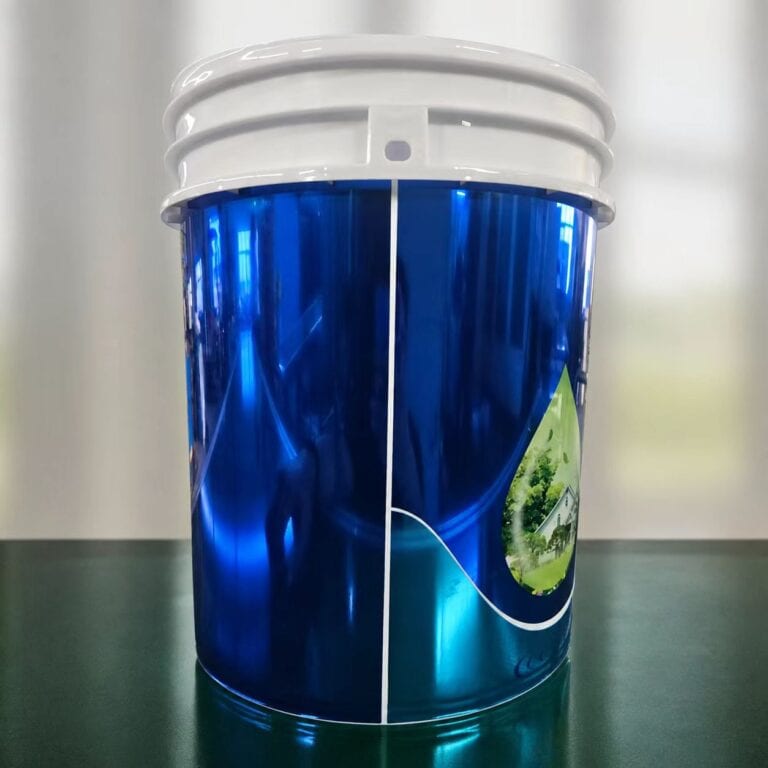
Planning a Bucket IML Project?
To configure the right IML robot for bucket production, send us your bucket drawing or sample, container dimensions and weight, label drawing and material, mold drawing and cavity quantity, injection molding machine model, target cycle time, and required downstream process.
HecosTech can evaluate the complete application and recommend a project-specific robot configuration, end-of-arm tooling, label handling method, machine interface, takeout sequence, stacking, conveying, or handle-related automation.
Will the Bucket IML Robot Fit Your Injection Molding Machine?
A HecosTech IML robot for bucket production can be adapted to all injection molding machine brands, making it suitable for new bucket production lines and existing machine upgrades.
Final compatibility is confirmed from the machine model, clamping force, tie-bar spacing, platen dimensions, mold opening stroke, ejector conditions, robot mounting position, interface signals, safety requirements, and available installation space.
HecosTech supports EUROMAP 67 and EUROMAP 12 interfaces for communication between the injection molding machine and robot. The interface and operating sequence should be confirmed before the system is manufactured.
IML Robot for Bucket Production FAQ
Which IML robot is suitable for 20L paint buckets and 5-gallon pails?
The correct IML robot for bucket production should not be selected from nominal capacity alone. A 20L bucket IML robot or 5 gallon pail IML robot must be evaluated according to the actual container dimensions and weight, mold design, label coverage, injection molding machine, target cycle time, takeout method, and downstream handling. The HecosTech HT-20A side-entry robot and HT4-16S top-entry robot may both fall within the relevant container range, but the final configuration must be confirmed from the complete project data.
Can a bucket IML robot work with an existing injection molding machine?
Yes. HecosTech IML robots can be adapted to all injection molding machine brands. Final integration requires the existing machine model, clamping force, platen and tie-bar dimensions, mold opening stroke, interface information, installation space, and production sequence to be checked.
What information is required for a bucket IML robot quotation?
Provide the bucket drawing or sample, dimensions and weight, label drawing and material, mold drawing and cavity quantity, injection molding machine brand and model, current and target cycle time, factory layout, and any requirements for takeout, stacking, conveying, inspection, or handle assembly. Complete project data supports a more accurate technical proposal and quotation.
Planning a paint bucket, food pail, chemical container, lubricant bucket, or other rigid packaging project? If you need a large container IML robot, send HecosTech your product, mold, label, injection molding machine, target cycle time, and downstream handling requirements.
Our team can evaluate the complete production application and prepare a project-specific proposal covering the IML robot, tooling, label handling, product takeout, stacking, conveying, inspection, and other required automation.