Review takeout task and equipment selection against the actual UAV part, mold, machine, tooling load, motion path and receiving position. Confirm the offered configuration for the actual project; a catalogue entry alone does not establish application suitability.
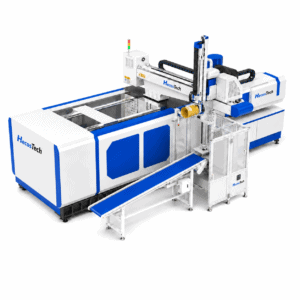
An injection molding robot for drone parts automatically removes molded UAV plastic components from the mold and transfers them to a defined position after each molding cycle.
Depending on the part and production process, the robot can place components on a conveyor, fixture, cooling station, inspection area or other downstream equipment. Injection molding takeout robots commonly use customized end-of-arm tooling with gripping, vacuum suction or combined handling methods according to the molded part.
Typical UAV applications can include drone housings, battery covers, sensor enclosures, connector housings, protective covers, brackets and other injection-molded plastic components.
Review takeout task and equipment selection against the actual UAV part, mold, machine, tooling load, motion path and receiving position. Confirm the offered configuration for the actual project; a catalogue entry alone does not establish application suitability.
What Does an Injection Molding Robot Do in Drone Parts Production?
The main task of an injection molding robot for drone parts is to coordinate with the injection molding machine after the mold opens.
A typical sequence can include:
Entering the mold area
Gripping or vacuum-holding the molded UAV part
Removing the component from the mold
Moving outside the mold area
Transferring the part to a conveyor, fixture or placement station
A conventional takeout robot is primarily designed around molded-part removal and transfer. HecosTech’s current injection molding robot guidance also describes the process as mold entry, product gripping, mold exit, transverse transfer and placement.
For UAV production, the actual sequence depends on the plastic component. A simple protective cover may only require takeout and placement, while a larger housing may require controlled positioning before transfer to a fixture or downstream process.
Define the Takeout and Placement Task
Define where the part is located after mold opening, how the EOAT approaches it, and where the part must be received after removal. Use the actual part and mold drawings to define that sequence.
A 3-axis robot can be evaluated when the drone plastic part mainly requires mold entry, product removal, transverse transfer and defined placement without additional complex orientation movements.
Check the proposed motion sequence and tooling using the actual machine and mold arrangement. A robot family name or axis label does not establish the available reach, clearance or orientation for this UAV component.
For UAV projects, final suitability still depends on the component dimensions, weight, gripping position, mold structure, demolding method and required downstream process.
Review the Required Takeout Motion and Tooling
When the production process requires additional orientation, positioning or multi-step handling after takeout, a higher-axis robot can be evaluated according to the required motion.
Compare the current takeout equipment range after the required orientation and receiving sequence are defined. Confirm the actual drive and rotation configuration, gripping or vacuum method and downstream connections in the project proposal; more axes alone do not establish suitability.
The correct robot should not be selected simply because it has more axes. Robot travel, payload, mold layout, end-of-arm tooling and downstream movements must match the actual UAV plastic part.
Drone Plastic Parts for Takeout and Injection Molding Automation
An automatic takeout robot for drone plastic parts can be evaluated for components such as:
UAV upper and lower housings
Battery covers and housings
Sensor and electronics enclosures
Camera and gimbal plastic mounts
Connector housings
Protective covers
Propeller guards
Plastic brackets and mounting components
The gripping method must be selected according to the component geometry and surface. Vacuum tooling may suit some housings or covers, while mechanical gripping may be more appropriate for other molded parts.

Need a Takeout Robot for Your UAV Plastic Parts?
Review takeout task and equipment selection against the actual UAV part, mold, machine, tooling load, motion path and receiving position. Confirm the offered configuration for the actual project; a catalogue entry alone does not establish application suitability.
How to Select an Injection Molding Robot for Drone Parts
Selecting an injection molding robot for drone parts should start with the actual molding project rather than only the number of robot axes.
Important information includes:
Injection molding machine brand and model
Mold size and mold-opening space
UAV plastic part dimensions and weight
Required robot travel
End-of-arm tooling method
Takeout and placement sequence
Downstream conveyor, fixture or equipment requirements
A 3-axis robot may be sufficient for straightforward takeout and placement, while 4-axis or 5-axis motion can be evaluated when additional positioning or handling movements are required.
The correct configuration should provide the required motion without adding unnecessary complexity.
Why Choose HecosTech for UAV Takeout Automation?
HecosTech is a China manufacturer of injection molding robots and UAV plastic parts automation equipment for molded-part takeout and handling.
For an injection molding robot for drone parts project, HecosTech can support:
takeout task and equipment selection
Customized end-of-arm tooling
Conveyor and downstream handling integration
Injection molds and molded UAV plastic parts
Insert molding automation for suitable components
Because HecosTech can also support molds and molded plastic parts, robot takeout requirements can be considered together with the actual component and mold rather than as an isolated automation purchase.
Injection Molding Robot for Drone Parts FAQs
What information is needed to review automatic takeout for this UAV part?
Automatic takeout requires review of the actual UAV part, mold access, machine interfaces, part and tooling load, required path and receiving position. Compare the current takeout range after those conditions are defined; the catalogue alone does not approve a particular UAV housing or component.
The suitable series depends on the actual movement, payload, robot travel, mold and downstream process.
Can one robot remove the part and transfer it to another station?
Yes. An injection molding robot for drone parts can remove the molded component and transfer it to a conveyor, fixture or other defined position when the project is configured for that handling sequence.
What information is needed for robot selection?
Please provide the injection molding machine model, mold information, plastic part drawing or sample, part weight, required takeout position and any downstream handling requirements.
This information allows HecosTech to evaluate the suitable robot series, travel, payload and end-of-arm tooling.
Review takeout task and equipment selection against the actual UAV part, mold, machine, tooling load, motion path and receiving position. Confirm the offered configuration for the actual project; a catalogue entry alone does not establish application suitability.