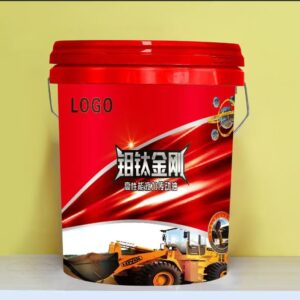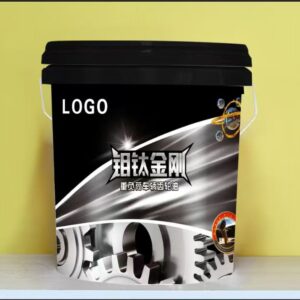

Description
Custom In-Mold Labeled Containers Overview
Custom in-mold labeled containers are injection molded plastic packaging products in which the printed label is placed inside the mold before molding and becomes integrated with the container during production. This process combines container forming and decoration within the same production cycle. The container and IML configuration can be adapted according to product shape, labeling area, artwork, mold design, production requirements, and the intended packaging application.
Container and Label Design
Container shape, dimensions, lid configuration, labeling area, artwork, graphics, colors, and IML label layout can be customized according to branding and packaging requirements. The final design should consider product function, mold geometry, label positioning, robot handling conditions, stacking requirements, and the injection molding process. Container and label design should be coordinated before production to support accurate label placement and consistent finished-product appearance.
An in-mold label does not by itself establish that a container is recyclable. Review the container, label, printing and other components against the intended recycling stream, and confirm the collection and sorting arrangements in the market where the package will be used. RecyClass’s recyclability framework explains why both packaging design and local recycling infrastructure matter. Any recyclability claim should refer to the agreed complete packaging specification and supporting evidence; it should not be inferred from the IML process name.
Packaging Applications
Custom in-mold labeled containers can be developed for different plastic packaging applications, including food containers, dairy packaging, plastic tubs, pails, buckets, household product packaging, chemical packaging, and other branded plastic containers. Final suitability depends on the container design, product requirements, mold structure, labeling area, handling conditions, and production process.
Production System Integration
The container, IML label, mold, injection molding machine, and IML robot should be engineered as an integrated production system. Project matching should evaluate container geometry, mold structure, label pickup and placement, product takeout direction, robot access, production cycle, stacking or downstream handling, and available automation space. The complete process should be configured according to the actual packaging product and production requirements before manufacturing.
The In-Mold Decorating Association provides additional industry information about in-mold labeling technology and applications.
Project Scope and Proposal
Each proposal identifies whether the supply is finished decorated containers, a mold, or an IML production system. For finished containers, agree the product and artwork revision, intended use, quantity, closure fit and sample-approval reference. Machine, robot and layout details apply when tooling or line integration is included.
Contact HecosTech to receive a project-specific custom IML container proposal.
Explore our custom plastic containers, custom food packaging containers, and custom plastic pails and buckets for additional packaging applications.
IML Container FAQs
1. What are IML containers?
Custom in-mold labeled containers are injection molded plastic containers in which a printed label is placed inside the mold before molding and becomes integrated with the finished container during production.
2. Which containers can use IML?
In-mold labeling can be applied to different injection molded packaging products, including food containers, tubs, pails, buckets, dairy packaging, household packaging, and other custom plastic containers.
3. What design conditions matter?
An in-mold labeled container should be designed by considering the container shape, labeling area, artwork, label dimensions, mold geometry, robot access, label pickup and placement, product takeout, stacking requirements, and injection molding process. These elements should be coordinated as one system before production.
4. Do IML containers need a specific mold?
The mold should be designed or configured for the specific container, label positioning, robot access, and injection molding process. Final mold requirements depend on the container geometry, labeling area, production process, and automation configuration.
5. Can label insertion and takeout be automated?
Yes. An IML robot can automatically pick up and place the label inside the mold before injection molding and remove the finished container after molding as part of an automated production cycle.
6. What should I send for a proposal?
Customers requesting finished IML containers should send a drawing or sample, dimensions, intended contents, matching-lid requirements, artwork, label coverage and order quantity. Include mold, machine and robot information only if the request covers tooling or production-system integration.