
Description
Custom Plastic Pails and Buckets Overview
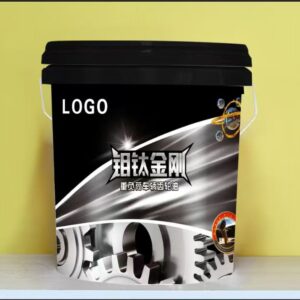
Custom plastic pails and buckets are developed according to the packaged product, container function, appearance, handling requirements, molding process, and production needs. Bucket shape, dimensions, opening design, lid configuration, handle structure, decoration area, stacking requirements, and other structural details can be adapted according to the project. The final design should also consider mold structure, demolding conditions, product takeout, stacking, transportation, and downstream handling.
For other injection molded packaging applications, explore our custom plastic containers.
Pail, Lid and Handle Design
Plastic pail and bucket design can be customized according to filling requirements, storage, transportation, stacking, branding, decoration, and handling needs. Design factors may include bucket geometry, dimensions, lid or closure structure, handle configuration, labeling area, artwork, and stacking method. For in-mold labeled buckets, the label area, label dimensions, mold geometry, and robot handling conditions should also be coordinated during product development.
Confirm the Handle and Filled-Pail Handling Requirement
Define how the filled pail will be picked up and moved. A handle’s appearance, a lid-fit sample or stacking evidence does not establish that the proposed handle and its attachment suit a particular carrying operation.
| Decision | Evidence to compare |
|---|---|
| Handle and attachment | Identify the pail, handle and attachment configuration by drawing or sample revision. State the intended contact point and whether handling is manual or mechanical. Request evidence covering that assembled configuration, filled mass and intended handling conditions; identify any proposed operation that remains unconfirmed. |
| Static stacking | Keep the stack arrangement and its evidence separate from carrying. A finding for stationary loading does not resolve the handle connection’s suitability for pickup or movement. Use the existing filled-pack handling review for the stacking requirement. |
Record two outcomes for the same package revision: which carrying method and handle configuration the evidence covers, and which stacking arrangement it covers. Mark open operations and who must provide or review the missing evidence before confirming the requirement.
CurTec’s Click Pack manual gives product-specific handling limits separately from stacking guidance. ZwickRoell’s packaging examples distinguish carrying-handle checks from container compression. These are external examples, not HecosTech ratings, tests or handling approvals. Include the intended operation and unresolved evidence in your pail and bucket enquiry.
Packaging Applications
Custom plastic pails and buckets can be developed for different packaging applications, including food pails, paint buckets, chemical pails, lubricant containers, household product packaging, industrial packaging, and other injection molded containers. Different applications may require different bucket structures, lid designs, handle configurations, decoration areas, stacking methods, and handling processes. Final configuration should be determined according to the actual packaged product and production requirements.
IML and Production Integration
For plastic pails and buckets using in-mold labeling, the bucket, IML label, mold, injection molding machine, and IML robot should be coordinated as one production system. Project matching should evaluate bucket geometry, labeling area, mold structure, label pickup and placement, product takeout direction, handle or lid requirements, robot access, production cycle, stacking or conveyor requirements, and downstream handling.
The In-Mold Decorating Association provides additional industry information about in-mold labeling technology and packaging applications.
Project Scope and Proposal
Each custom plastic pail and bucket project can be configured according to the customer’s packaging product, bucket design, artwork, mold, injection molding process, and automation requirements. HecosTech can coordinate bucket design, mold development, IML labels, robot handling, product takeout, conveyor connection, stacking or placement, and supporting automation according to the project.
Contact HecosTech to receive a project-specific custom plastic pail, bucket, and automation proposal.
Explore our custom plastic containers, custom food packaging containers, and custom in-mold labeled containers for other packaging applications.
Pail and Bucket FAQs
1. Which packaging applications can the pails cover?
Custom plastic pails and buckets can be developed for food, paint, chemicals, lubricants, household products, industrial products, and other injection molded packaging applications. Bucket structure, lid design, handle configuration, labeling area, and stacking method can be adapted according to the packaged product and handling requirements.
2. Can the pails and buckets use IML?
Yes. Plastic pails and buckets designed for IML can be coordinated with the label, mold, injection molding machine, and IML robot so that label insertion, molding, product takeout, and downstream handling can be integrated into the production process.
3. Do the buckets need a custom mold?
The mold should match the bucket geometry and production requirements. Final mold configuration depends on bucket shape, dimensions, cavity arrangement, lid or handle requirements, demolding conditions, labeling requirements, and injection molding process.
4. Can bucket production be automated?
Yes. Depending on the project, plastic bucket production can integrate IML label insertion, robotic takeout, conveyors, handle or lid handling, stacking, inspection, placement, and other downstream automation equipment.
5. What should I send for a proposal?
Customers requesting finished pails or buckets should provide product drawings or samples, dimensions, intended use, artwork requirements, and lid or handle requirements. If tooling or production integration is also required, include available mold and machine details, target production requirements, and required downstream operations.